Category Archives: Hamster foods

can hamsters eat skittles

Can Hamsters Eat Skittles?

Skittles is a brand of fruit-flavoured sweets, currently produced and marketed by the Wrigley Company, a division of Mars, Inc..

They have hard sugar shells which carry the letter S and as a result signifies their name.

The inside is mainly sugar, corn syrup, and hydrogenated palm kernel oil along with fruit juice, citric acid, and natural and artificial flavors.

The confectionery has been sold in a variety of flavor collections, such as Tropical and Wild Berry.

So can hamsters eat skittles?

Let’s take a look at their nutritional data and find out more.

In particular, their acidic, water, sugar, fat, salt, calcium, and phosphorus content is of most interest as far as hamsters are concerned.

Nutritional value per 100 g (3.5 oz)
Energy 1,680 kJ (400 kcal)
Carbohydrates
90.7 g
Sugars 75.6 g
Dietary fibre 0 g
Fat
4.4 g
Saturated 3.9 g
Trans 0 g
Protein
0 g
Vitamins
Vitamin A equiv. (0%) 0 μg
Vitamin C (0%) 0 mg
Minerals
Calcium (0%) 0 mg
Iron (0%) 0 mg
Sodium (1%) 15.1 mg

source wikipedia

As you can see, skittles contain a huge amount of sugar and quite a bit of fat.

This means that hamsters cannot eat skittles due to the amount of sugar that they contain and may make them sick.

Skittles are best avoided due to their content.

There are much better foods for them to eat and will enjoy much more.
 

can hamsters eat twine

Can Hamsters Eat Twine?

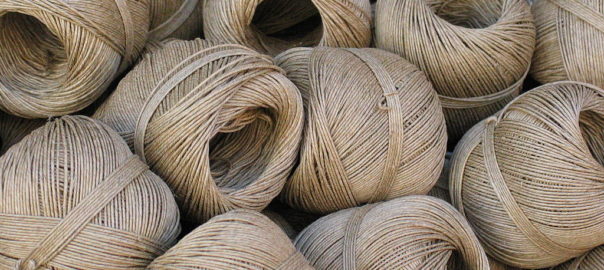
Twine is a light string or strong thread composed of two or more smaller strands or yarns twisted, and then twisted together. More generally, the term can be applied to a cord.

Natural fibres used for making twine include cotton, sisal, jute, hemp, henequen, and coir. A variety of synthetic fibres are also used.

There are multiple claims to the world’s biggest ball of twine record in the United States. As of 2014, the ball of twine with the largest circumference is located in Cawker City, Kansas (source)

So can hamsters eat twine?

No they can’t unfortunately. It is not good for them to eat and should be avoided if it can be helped.

can hamsters eat wild rice

Can Hamsters Eat Wild Rice?

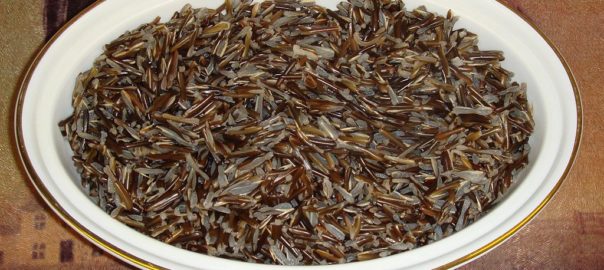
Wild rice are four species of grasses forming the genus Zizania, and the grain that can be harvested from them.

The grain was historically gathered and eaten in both North America and China.

While now a delicacy in North America, the grain is eaten less in China,:165 where the plant’s stem is used as a vegetable.

So can hamsters eat wild rice?

Let’s take a look at their nutritional data and find out more.

In particular, their acidic, water, sugar, fat, salt, calcium and phosphorus content is of particular interest as far as hamsters are concerned.

Nutritional value per 100 g (3.5 oz)
Energy 423 kJ (101 kcal)
Carbohydrates
21.34 g
Dietary fiber 1.8 g
Fat
0.34 g
Protein
3.99 g
Vitamins
Vitamin A equiv.
lutein zeaxanthin
64 μg
Thiamine (B1) (5%) 0.052 mg
Riboflavin (B2) (7%) 0.087 mg
Niacin (B3) (9%) 1.287 mg
Vitamin B6 (10%) 0.135 mg
Folate (B9) (7%) 26 μg
Vitamin C (0%) 0 mg
Vitamin E (2%) 0.24 mg
Minerals
Calcium (0%) 3 mg
Iron (5%) 0.6 mg
Magnesium (9%) 32 mg
Manganese (13%) 0.282 mg
Phosphorus (12%) 82 mg
Potassium (2%) 101 mg
Sodium (0%) 3 mg
Zinc (14%) 1.34 mg
Other constituents
Copper 0.121 mg

source wikipedia

As you can see wild rice contains a lot of phosphorus, a hint of calcium and fat and quite a lot of acidic content.

This means that they can eat it, but only a few grains at a time as it is not great for them to eat. They can eat it raw or cooked.

can hamsters eat yams

Can Hamsters Eat Yams?

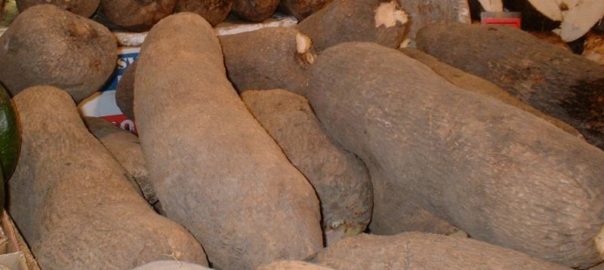
Yams are a monocot from the Dioscoreaceae family.

Sweet potatoes are a dicot from the Convolvulaceae family.

Therefore, they are about as distantly related as two flowering plants can be.

Culinarily, yams are starchier and drier than sweet potatoes.

So can hamsters eat yams?

Let’s take a look at their nutritional data and find out more.

In particular, their acidic, water, sugar, fat, salt and calcium content is of particular interest as far as hamsters are concerned.

Nutritional value per 100 g (3.5 oz)
Energy 494 kJ (118 kcal)
Carbohydrates
27.9 g
Sugars 0.5 g
Dietary fiber 4.1 g
Fat
0.17 g
Protein
1.5 g
Vitamins
Vitamin A equiv. (1%) 7 μg
Thiamine (B1) (10%) 0.112 mg
Riboflavin (B2) (3%) 0.032 mg
Niacin (B3) (4%) 0.552 mg
Pantothenic acid (B5) (6%) 0.314 mg
Vitamin B6 (23%) 0.293 mg
Folate (B9) (6%) 23 μg
Vitamin C (21%) 17.1 mg
Vit E (2%) 0.35 mg
Vitamin K (2%) 2.3 μg
Minerals
Calcium (2%) 17 mg
Iron (4%) 0.54 mg
Magnesium (6%) 21 mg
Manganese (19%) 0.397 mg
Phosphorus (8%) 55 mg
Potassium (17%) 816 mg
Zinc (3%)

source wikipedia

As you can see yams contain a lot of phosphorus, a little calcium, quite a lot of acidic content and a hint of sugar and fat.

This means that hamsters can eat yams but only in small amounts of a few pieces at a time that they can hold in their paws.

Only feed them fresh yams.

Do not feed them cooked yams, as they are bad for them and should be avoided.

can hamsters eat yarn

Can Hamsters Eat Yarn?

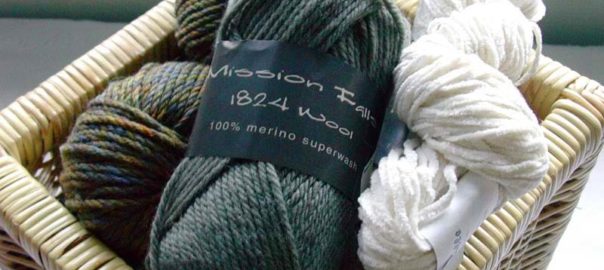
Yarn is a long continuous length of interlocked fibres which is also known as wool in some countries.

It is suitable for use in the production of textiles, sewing, crocheting, knitting, weaving, embroidery, and ropemaking.

Thread is a type of yarn intended for sewing by hand or machine and is popularly used around the world.

Modern manufactured sewing threads may be finished with wax or other lubricants to withstand the stresses involved in sewing.

Embroidery threads are yarns specifically designed for hand or machine embroidery.

Yarn can be made from a number of natural or synthetic fibers which

Many types of yarn are made differently though. (source)

So can hamsters eat yarn?

No they can’t eat yarn unfortunately.

It is not good for them to eat and may lodge in their throats.

can hamsters eat wheatgrass

Can Hamsters Eat Wheatgrass?

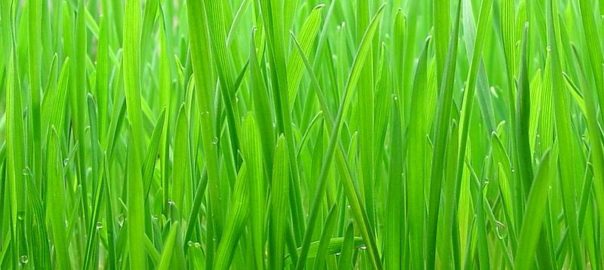
Wheatgrass is a food prepared from the cotyledons of a common wheat plant.

Wheatgrass differs from wheat malt in that it is served freeze-dried or fresh, while wheat malt is convectively dried.

Claims about the health benefits of wheatgrass range from providing supplemental nutrition to having unique curative properties, though few, if any, have been scientifically proven.

It is often available in juice bars, and some consumers grow and juice wheatgrass in their homes.

It is available as fresh produce, tablets, frozen juice and powder.

Wheatgrass is also available commercially as a spray, cream, gel, massage lotion, and a liquid herbal supplement. (source)

So can hamsters eat wheatgrass?

Yes they can eat it in small amounts, but nothing more that.

How Flexible Is A Hamster's Body

How Flexible Is A Hamster’s Body?

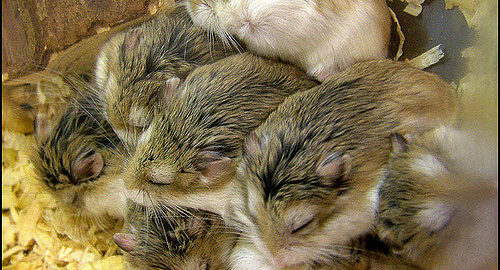
Ever asked the question ‘how flexible is a hamster’s body?’

They are amazing creatures who dont have the bone structure that we do.

Their bones although sturdy, in fact many think their bones are collapsable, but their bones are connected with joints and cartilidge just like ours.

Observing a hamster at first hand, enables you to get an insight into how different they are from us in the way they use their body.

Watching them in their cage

In the hamster cage we have, there are many different tunnels that our hamster can run along.

The tunnels are about three inches in diameter and allow the hamster to run about and explore away from their cage and nest.

I have seen him on many occasions turn inside the tunnel and head off in the opposite direction.

It is an extremely difficult manouvre to make and one that involves contortioning their body in order to push its head back on itself and drag its body behind it.

Observing them doing this, makes you realize how flexible their bodies are and how they are equipped for different contained environments.

They can squeeze through the tiniest of holes

Like other rodents such as rats and mice, hamsters can squeeze into the smallest of holes.

This allows them to get access to many different places and to escape different predators.

Like mice, hamsters don’t have collar bones which means that they can turn their head in the most unorthodox way.

But their skull is solid and cannot be shrunk or squeezed in any way.

So providing they can fit their head through a gap, the rest of their body will follow.

This also means that they can turn in confined spaces.

Getting their head through a gap is the key, the body follows

As long as they can fit their head through the remaining gap in the space.

So to answer the question, a hamster’s body is very flexible. It’s just their head that isn’t.

can hamsters eat thyme

Can Hamsters Eat Thyme?

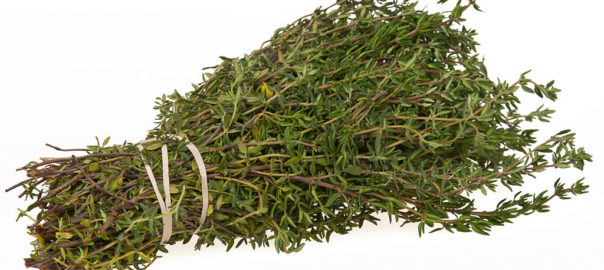
Thyme is an evergreen herb with culinary, medicinal, and ornamental uses.

The most common variety is Thymus vulgaris.

Thyme is of the genus Thymus of the mint family, and a relative of the oregano genus Origanum.

Thyme is sold both fresh and dried. While summer-seasonal, fresh greenhouse thyme is often available year round.

The fresh form is more flavourful, but also less convenient; storage life is rarely more than a week.

Although the fresh form only lasts a week or two under refrigeration, it can last many months if carefully frozen. (source)

So can hamsters eat thyme?

Yes it is fine for them to eat.

can hamsters run themselves to death

Can Hamsters Run Themselves To Death?

It is well known that hamsters love to run.

They are extremely energetic creatures who need to have the space or the apparatus such as a wheel or a ball to run in.

In fact, they are born to run and is something that is very natural for them to do.

In their natural habitat, hamsters can run up to 5 miles every night so as to find food to eat and places to hide away from predators.

If they are not sleeping, eating, or pooping, they are probably running or at least moving around.

So what happens if a hamster does not stop running due to the amount of energy that they have?

Can hamsters run themselves to death?

The great thing about hamsters is like other animals.

They are very self regulating and know how to stop and rest when they need to do so.

In the wild, they will find somewhere to rest which is safe for them to do so.

In captivity, they will simply retreat from the hamster wheel or stop running in a hamster ball if they need to.

The only reason that hamsters may keep running, is if they are being pursued by a predator in the wild.

They have to keep running, they know if they stop they will be killed.

But other than that, you can be rest assured that they will stop when they need to.

can hamsters eat soda crackers

Can Hamsters Eat Soda Crackers?

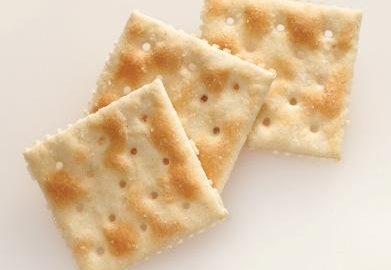
A saltine or soda cracker is a thin, usually square cracker made from white flour, yeast, and baking soda, with most varieties lightly sprinkled with coarse salt.

It has a very dry and crisp texture.

Saltines are commonly eaten as a light snack, often with cheese, butter or peanut butter.

They may also be dipped or crumbled in stews, chilis, soups or dips, or crumbled into salads.

Typically they are sold in boxes containing two to four stacks of crackers, each wrapped in a sleeve of waxed paper or plastic.

In restaurants, they are found in small wrapped packets of two crackers, which generally accompany soup or salad.

So can hamsters eat soda crackers?

No they can’t unfortunately. Their salty content is not good for hamsters to eat and may make them sick if they eat it.